Problem
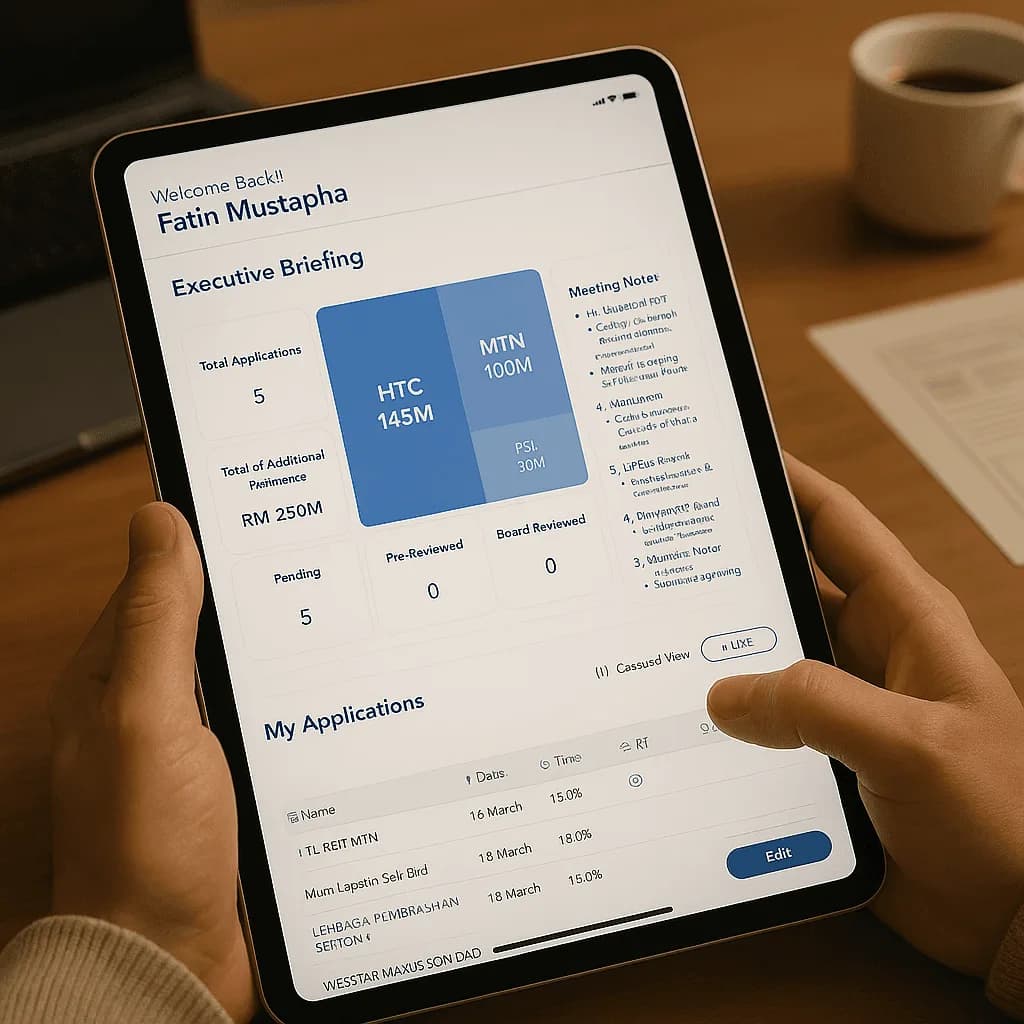
Managers used to prepare for a fortnightly board meeting by copying figures out of email attachments by hand. Shareholder and sentiment data sat in other tools, so they went looking there too, then wrote the minutes afterwards from memory. Prep ran to hours, the numbers were easy to get wrong, and nothing survived the meeting that anyone could audit.
In interviews the same three complaints came back. Finding the right document took too long. The tools they had were years behind the job. And on the morning it mattered, there was no quick way to read the market.
Research
I shadowed six managers for two weeks.
I sat in on real prep sessions and mapped every switch between tools. The average manager opened 7 sources before a meeting and re-typed the same figures three or four times. Everyone I interviewed said a version of the same sentence: “I don’t need more data. I need it in the room.”
Process
- DISCOVERStakeholder interviews, prep-session shadowing, competitive teardown of Bloomberg-style tools
- DEFINEMeeting-centric information architecture; success metric = minutes to "ready"
- DESIGNWireframes → dark-first UI system → coded prototype with real documents
- VALIDATETwo usability rounds with managers; summary-trust issues fixed before handoff
- SHIPToken-based design system delivered; engineers still use it
Decisions
Build everything around the meeting.
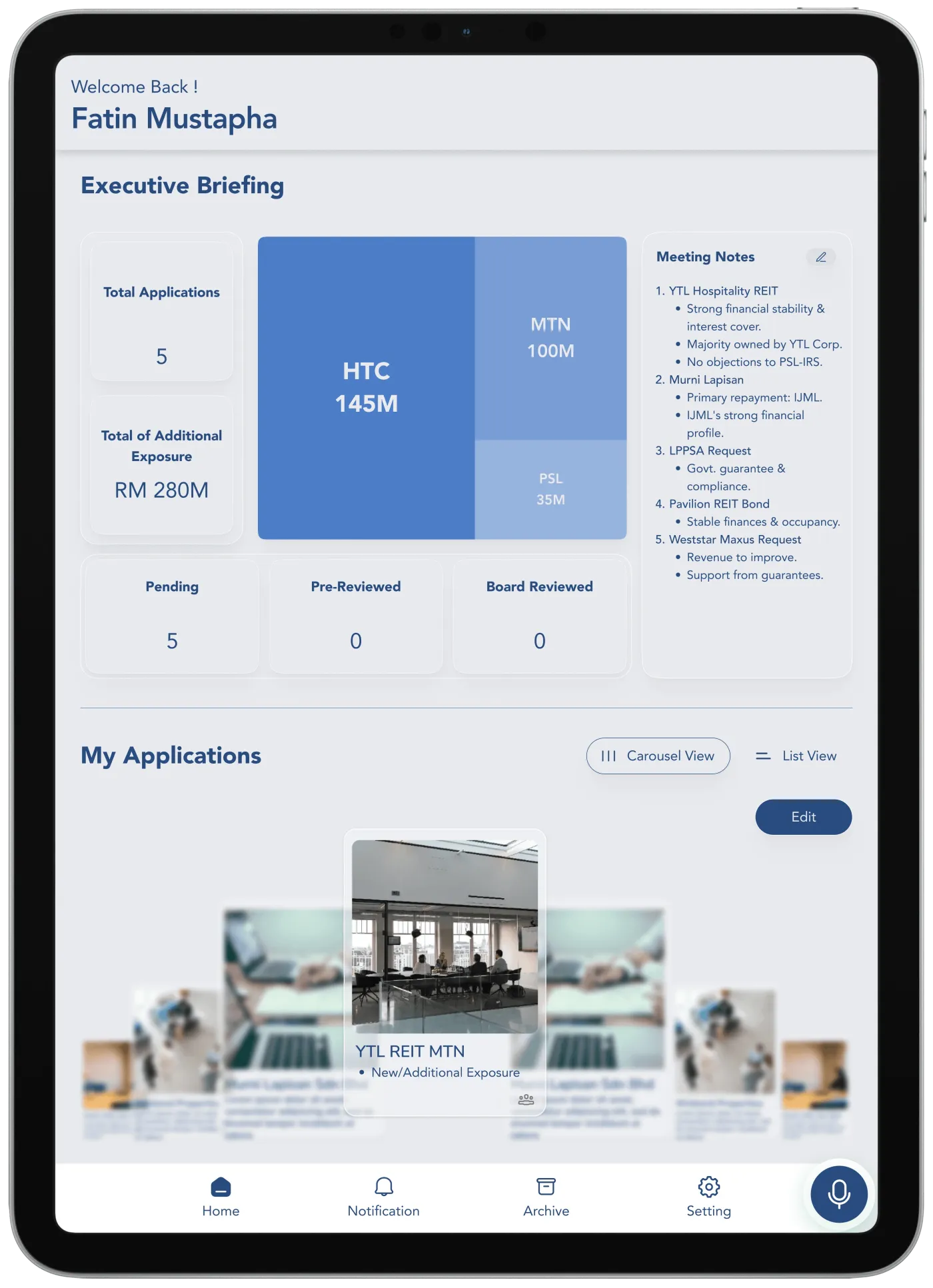
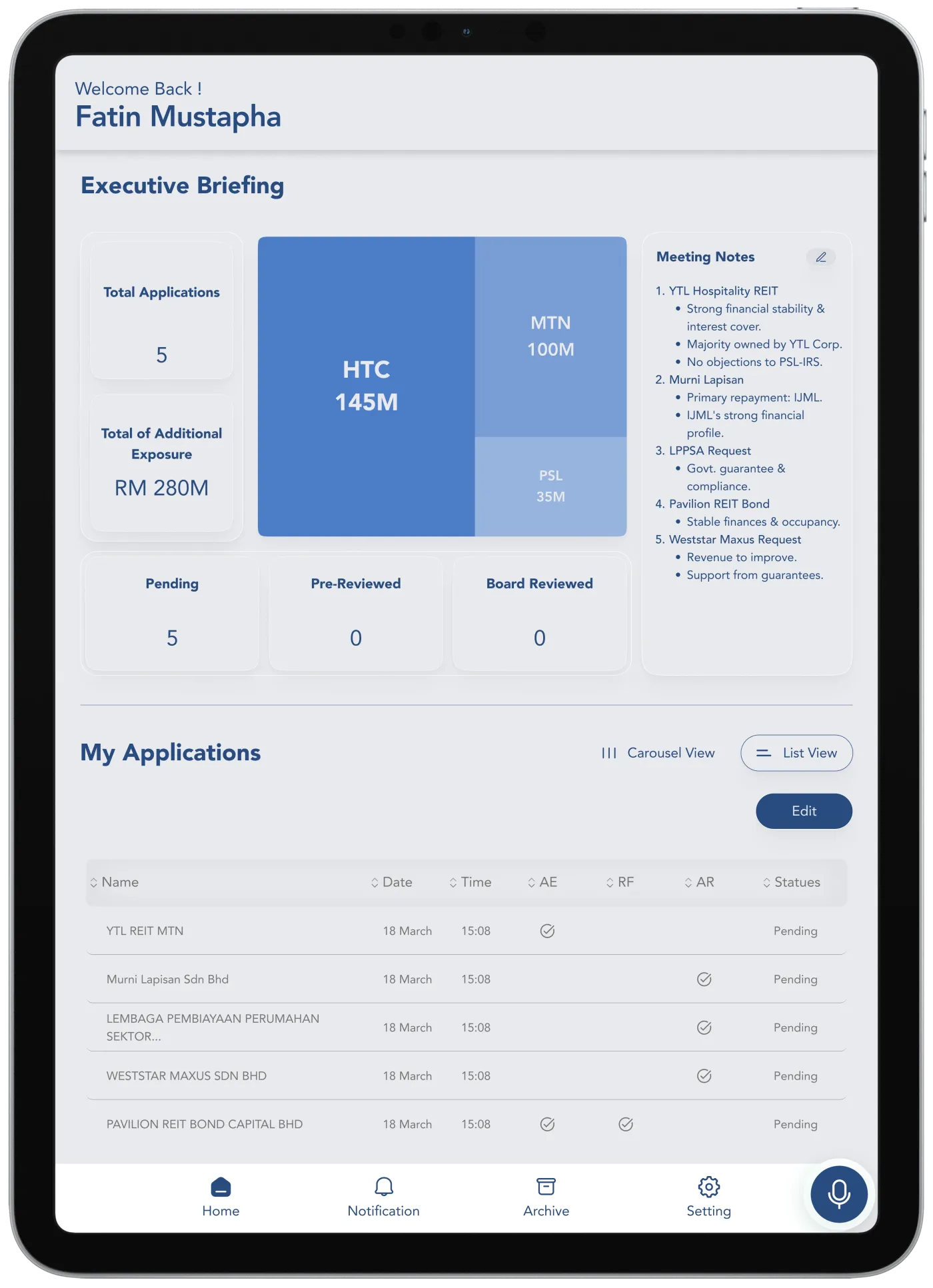
Every document, metric and note attaches to one board meeting, so prep is a single screen instead of a search.
Browsing the document library on its own got slower. I took that trade, because prep is the job the tool exists for.
Every summary shows its evidence.
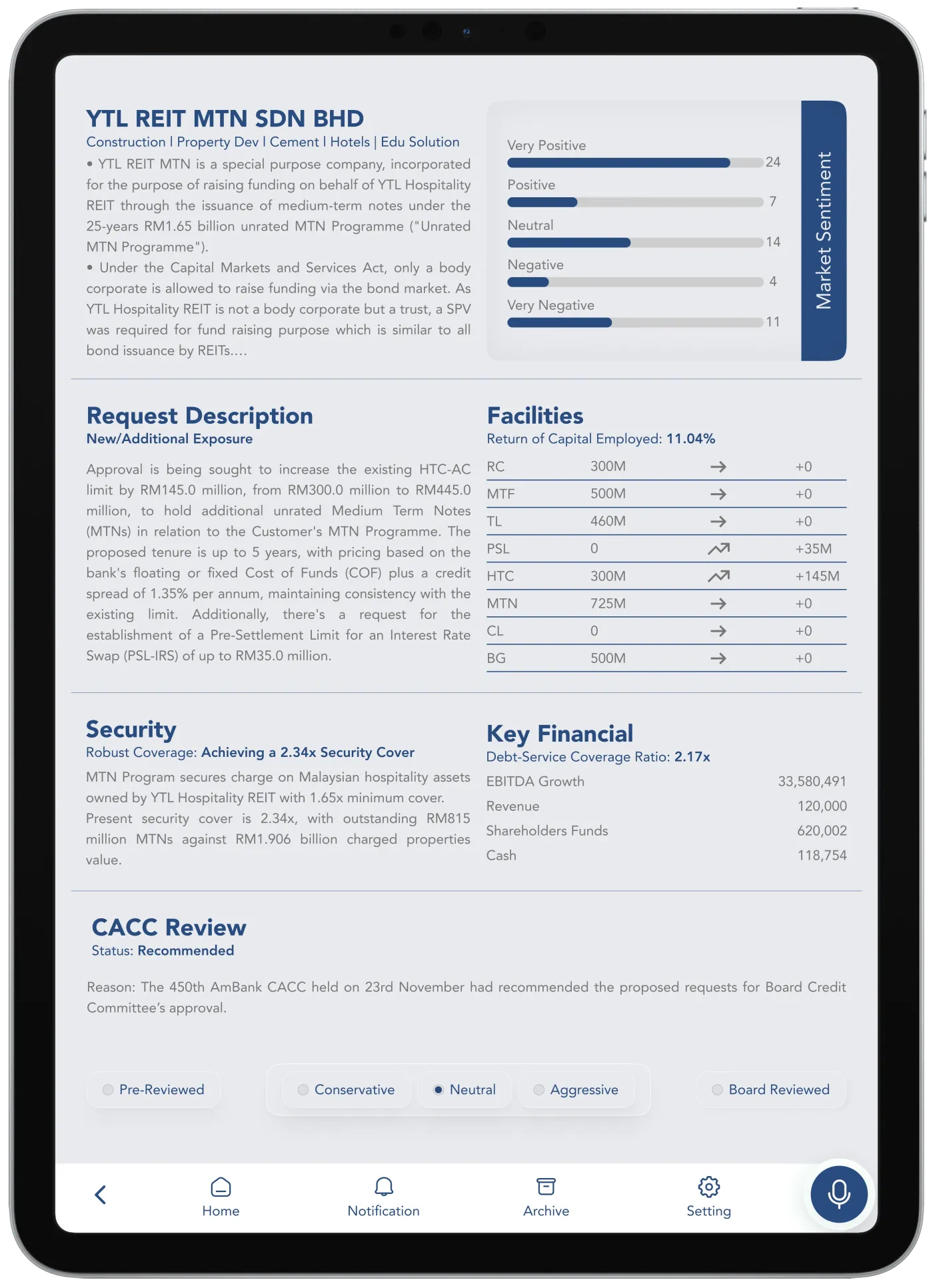
A summary lists what it pulled out, and one tap opens the passage it came from.
The screens carry more than a clean summary would. Executives will not act on a figure they cannot check, so density was the cheaper problem.
Design dark-first for long reading on iPad.
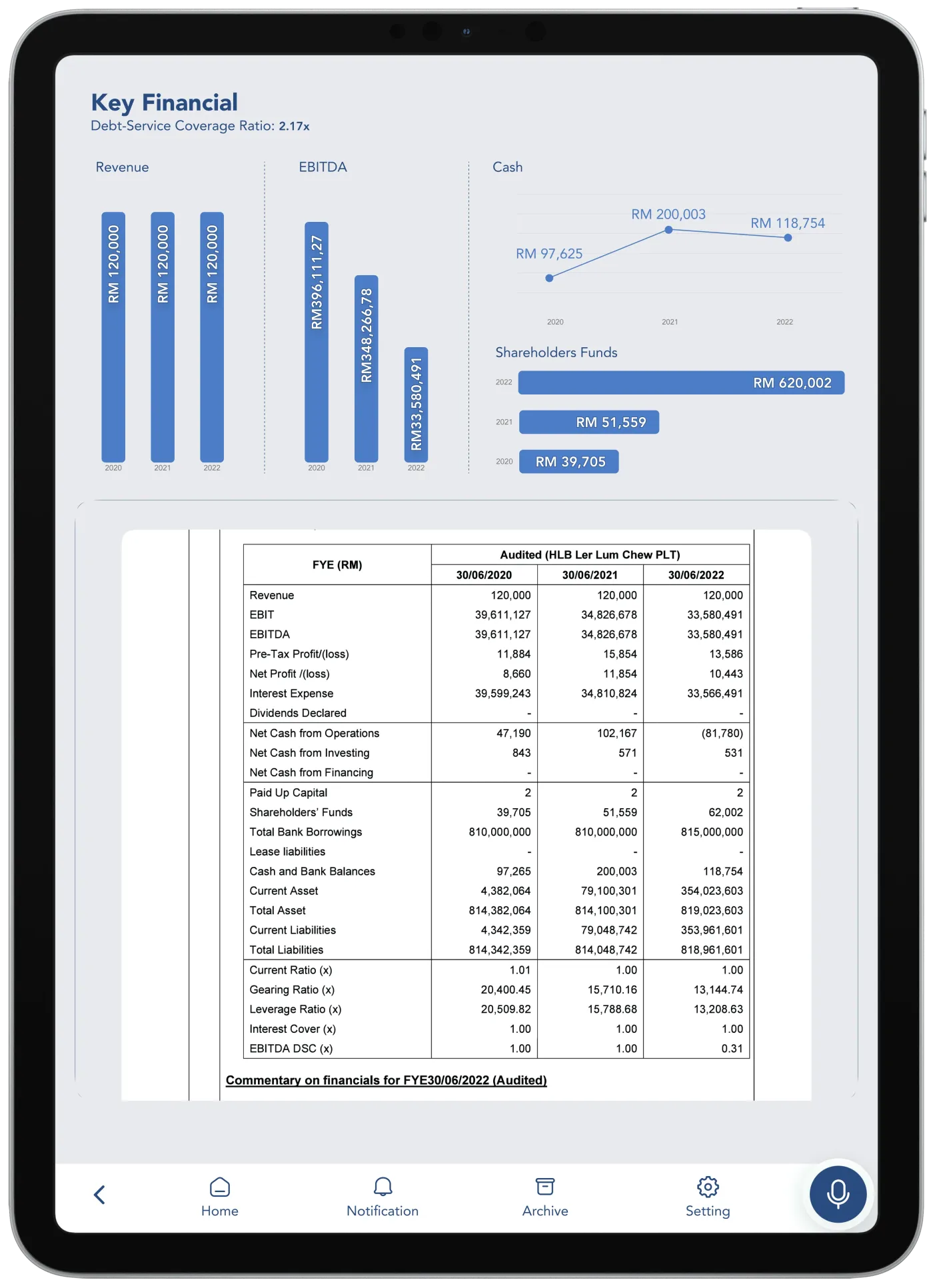
Financial tables and charts were re-tuned for a dark palette that holds contrast through a two-hour meeting.
The palette took far longer to settle than a light one would. It also became the thing people recognise the product by.
PrototypeTap the glowing hotspots to move through the app, like the real prototype.
Before → After
Email attachments, PDF exports and a legacy intranet. Figures re-typed by hand, minutes written afterwards from memory.
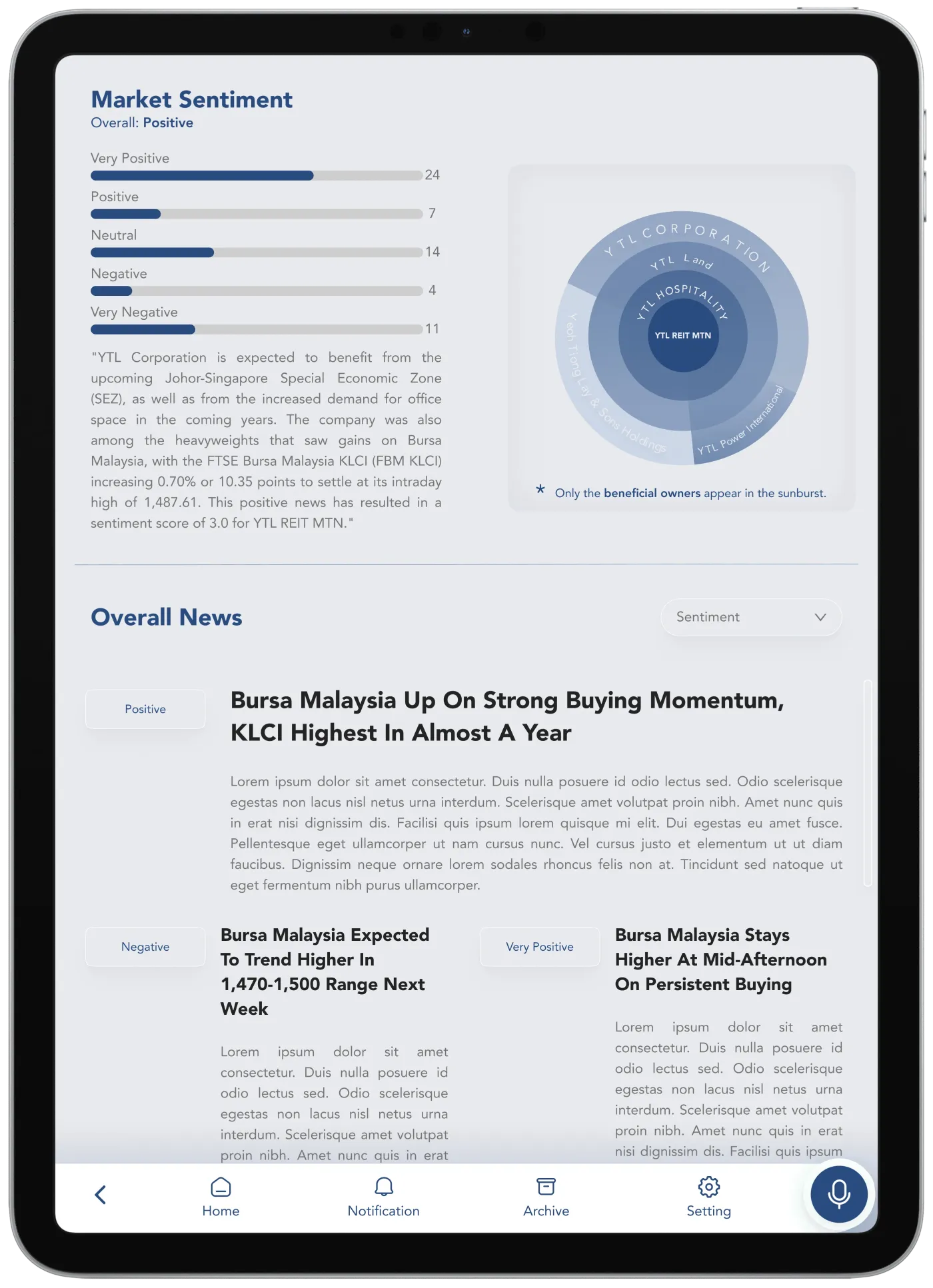
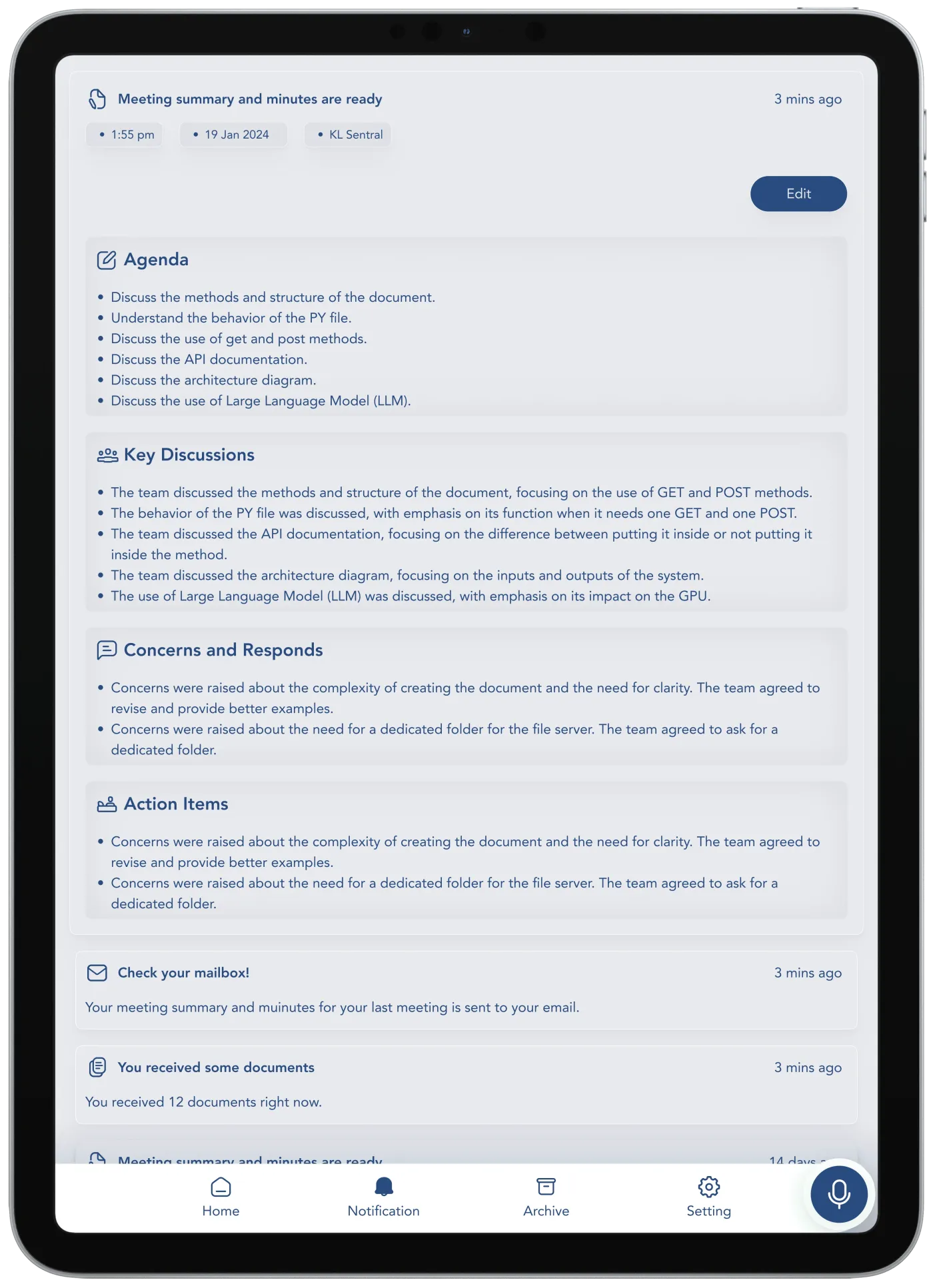
One iPad. Documents are summarised as they arrive, sentiment sits beside them, and the minutes go out before anyone leaves the room.
Outcome
- SPARQ pulls the key figures out of every financial document, so nobody copies them by hand.
- Shareholder data and market reputation read at a glance, on the same screen as the documents.
- Meetings run off live screens and end with minutes ready to share.
Reflection
The AI was the easy part. Getting an executive to act on a number a model produced took much longer, and no summary was worth anything until it sat one tap from its source. I should have measured time-to-ready from the first week, and tested the summaries against the notes managers still write by hand.